Correction (April 12, 2026): An earlier version of this article reported the statewide chronic absenteeism average as 26.2%; the correct figure is 26.7%. The gap between Baltimore City and the state average has been corrected from 22.5 to 22.0 percentage points.
This is part of The MDEdTribune's series on Maryland's chronic absenteeism data.
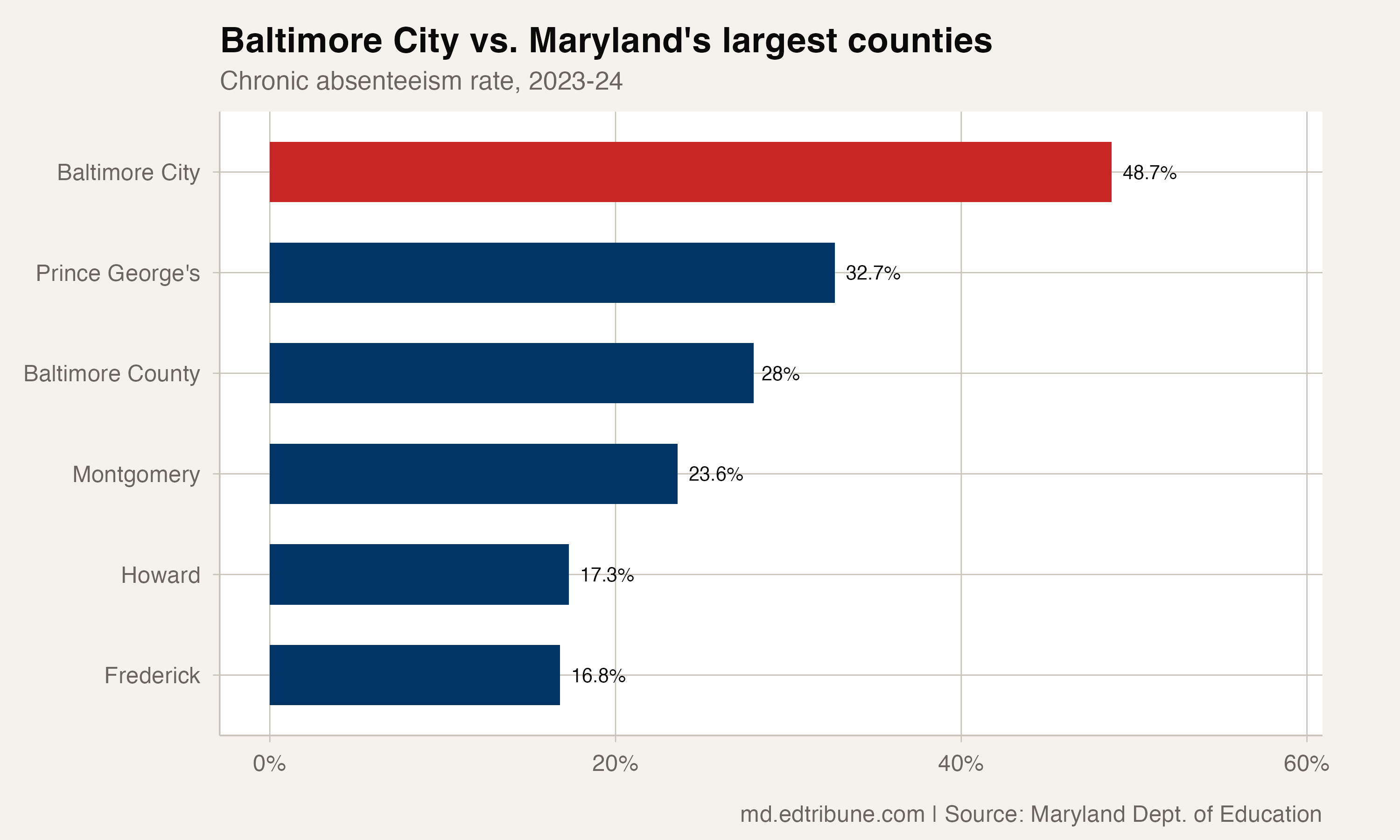
In Frederick County, about 17 out of every 100 students are chronically absent. Sixty miles east on Interstate 70, in Baltimore City↗ET, that number is 49.
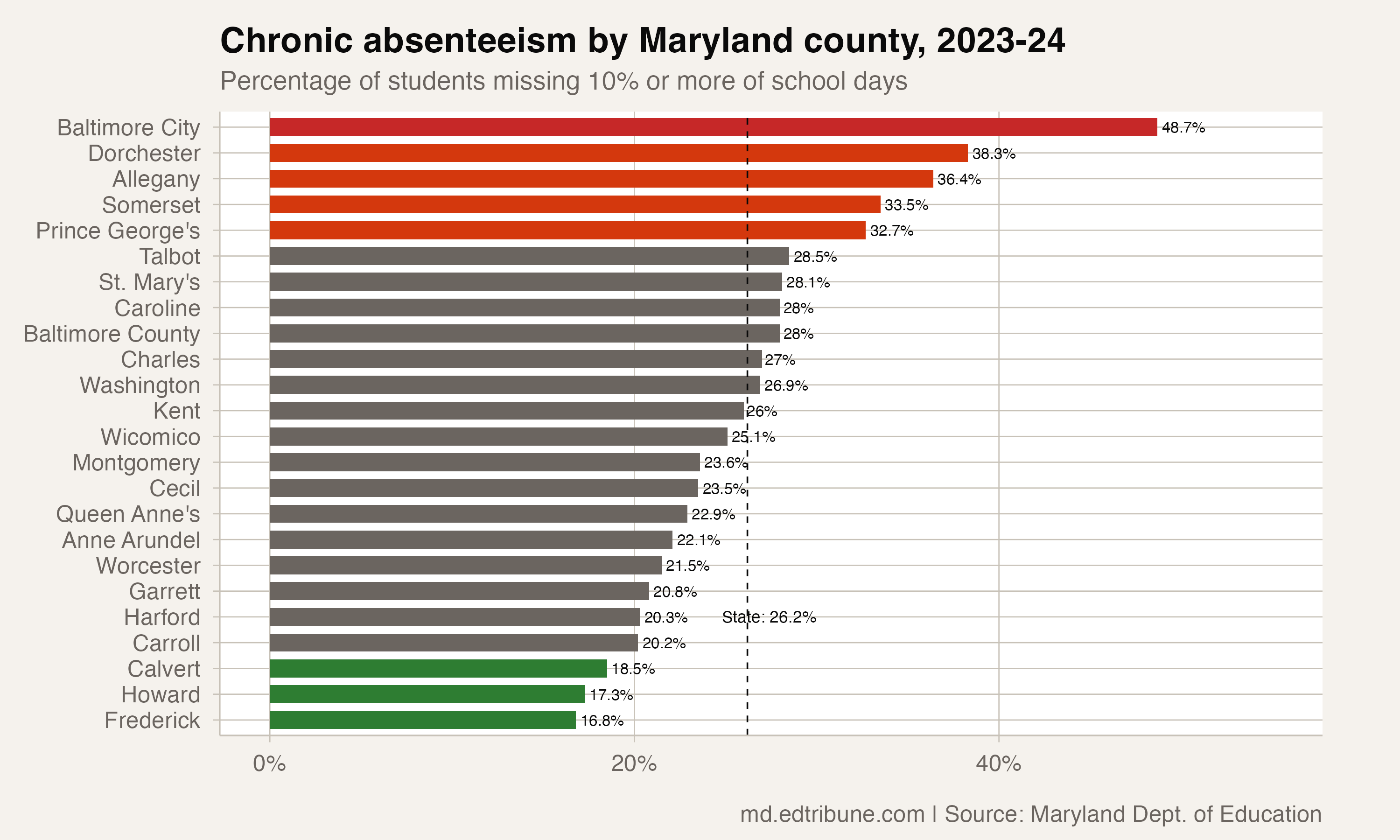
The 48.7% chronic absenteeism rate in Baltimore City Public Schools means that nearly one in two students misses at least 10% of the school year. No other Maryland county comes close. Dorchester County, at 38.3%, is the second-highest -- a distant 10.4 points behind. The state average sits at 26.7%.
Baltimore City's rate is not just the worst in Maryland. It exists on a different scale. The gap between Baltimore City and the state average -- 22.0 percentage points -- is wider than the gap between the state average and the lowest-absence county in the state.
A 31.9-point spread
Maryland is a geographically small state. The 60 miles between Frederick and Baltimore traverse one of the nation's wealthiest corridors, passing through Howard County -- the second-lowest absence rate at 17.3% -- on the way. The 31.9 percentage-point gap between Frederick's 16.8% and Baltimore City's 48.7% represents one of the widest county-level attendance divides in any state.
Five counties exceed 30%: Baltimore City (48.7%), Dorchester↗ET (38.3%), Allegany↗ET (36.4%), Somerset↗ET (33.5%), and Prince George's↗ET (32.7%). Only three are below 20%: Frederick↗ET (16.8%), Howard↗ET (17.3%), and Calvert↗ET (18.5%). The median county sits at 25.6%, meaning half of Maryland's counties have more than a quarter of their students chronically absent.
What the web research shows
The Maryland State Department of Education's January 2025 State Board presentation provides context the statewide data cannot: at the high school level, Black students have a 40.9% chronic rate, Hispanic students 46.4%, economically disadvantaged students 49.9%, and multilingual learners 51.0%. These subgroup rates are available only from the presentation, not from the data package, and represent a single year (2023-24). They are editorial context, not verifiable R-package data.
But they sketch a picture of who, specifically, is missing school in Baltimore City: a district that is 76% Black and where 84% of students qualify for free or reduced-price meals.
James McHenry Elementary/Middle School, according to Baltimore City Public Schools reporting, achieved the highest overall decrease in chronic absenteeism in the district through a home-visit program and attendance monitoring system. Poverty, the district has consistently identified, is the predominant root cause.
The shape of the crisis
Baltimore City's 48.7% represents an improvement from its own peak. According to MSDE presentations, the rate reached approximately 58% in 2021-22, meaning the district has clawed back roughly 9 percentage points in two years. That is meaningful progress in absolute terms, faster than the state's pace of improvement.
But at 48.7%, Baltimore City still has nearly half its students chronically absent. The district is improving from a level that no other Maryland county has ever reached.
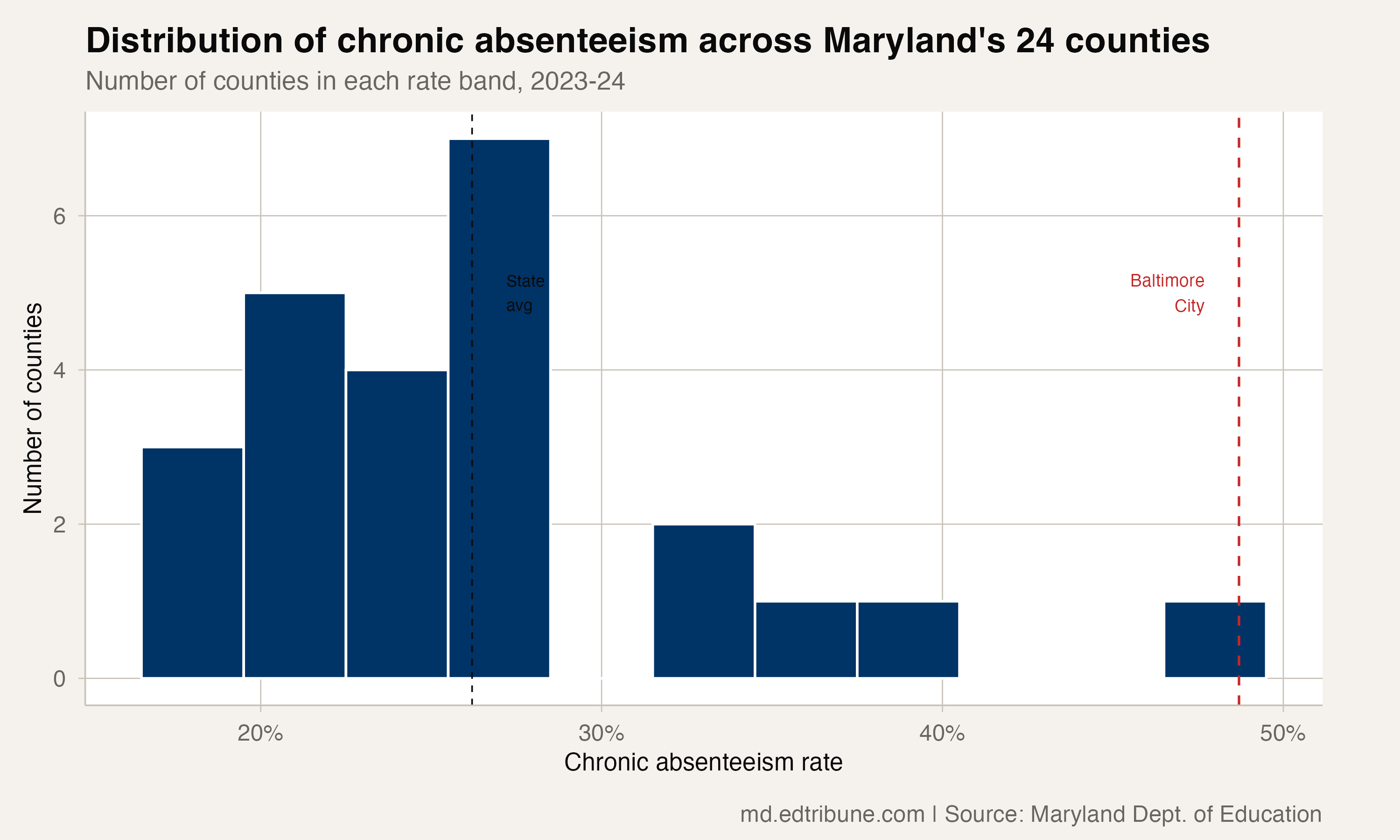
Maryland's attendance challenge is often described as a statewide problem. The data says otherwise. It is a problem concentrated in one city, replicated at smaller scale in a handful of rural counties, and largely absent from the suburban corridor that dominates the state's politics and resources. Remove Baltimore City from the state average and the chronic rate drops to roughly 21%. Add it back and the rate jumps to 26.7%. One school district, 60 miles from the lowest-rate county, accounts for nearly half the gap between where Maryland is and where it wants to be.
Detailed code that reproduces the analysis and figures in this article is available exclusively to EdTribune subscribers.
Discussion
Sign in to join the discussion.
Loading comments...